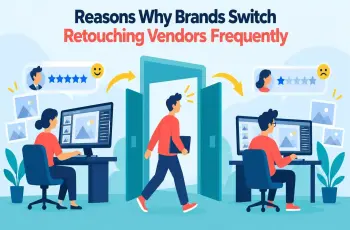
5 Reasons Why Brands Switch Retouching Vendors Frequently

Read | Loved by: 349
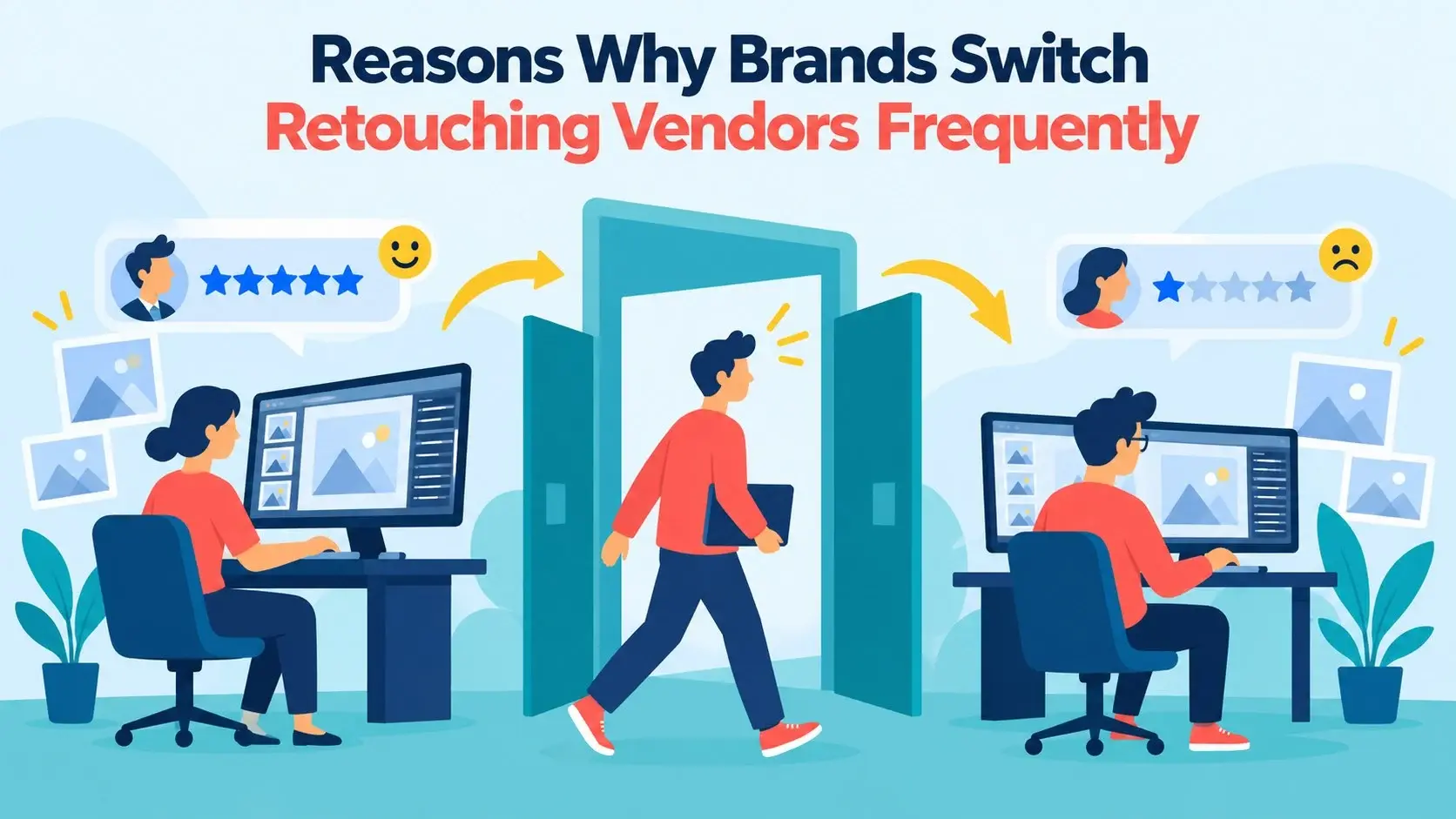
Brands switch jewelry retouching vendors for hidden outsourcing, no NDA or SLA, a general retoucher on jewelry work, missed deadlines, and broken account management. Most brands only name the problem after the damage is done. The table below shows what each reason looks like.
5 Reasons Why Brands Switch Retouching Vendors Frequently
After working with more than 10,000 clients from 85 different countries, we’ve heard from 55% of them that it’s tough to find trustworthy retouching companies. They have listed 5 main reasons why they keep switching retouching companies.
1.General retoucher on jewelry work
General retouchers can’t handle the intricate details of jewelry images because you need specialized retouching skills. We’ve seen that many companies add jewelry editing as an additional category alongside e-commerce and apparel. They don’t even have a dedicated team to retouch jewelry and lean more towards e-commerce photo editing. While researching the 5 best luxury jewelry retouching companies and the 10 leading jewelry retouching companies, we found a clear gap.
Jewelry editing needs four specific skills. These include glare control on facets, true metal color, sharp engravings and hallmarks, and gemstone color and clarity correction. If these are missing from the skill set, then that retouching team won’t deliver the perfect retouched images.
How to Tell If Your Retoucher Actually Has Jewelry Experience
Ask these three questions before you send a full batch to a retouching company:
Ask for jewelry-only portfolio samples: General product work doesn't count.
Ask who edits colored stones: Contact the team lead who manages the retouchers.
Ask how they check metal color against a physical reference: Check the real sample images that match platinum, white gold, and silver metal colors.
2. No NDA, No SLA: The Contract Gap
An NDA and SLA are written agreements that both parties sign to handle any future issues or discussions before starting the photo retouching project. An NDA (non-disclosure agreement) ensures that your images aren't used without your permission, and an SLA (service level agreement) turns turnaround and revision promises into terms you can enforce.
A jewelry retoucher's NDA and SLA should include:
Confidentiality period that covers unreleased images specifically
File-deletion terms after project completion
Written turnaround time, with a penalty or remedy for missing it
Revision count, plus refund or redo terms
Subcontracting disclosure clause
Most brands ask for neither until something goes wrong. They're left with no confidentiality term to point to other than verbal promises with no proof.
What to Ask For Before You Send Unreleased Jewelry Images
This is the format we give to our clients. You can copy and paste these into your first email to the retouching providers:
"Will you sign an NDA covering unreleased designs before I send files?"
"How long does confidentiality last, and when do you delete my files?"
"What is your written turnaround time, and what happens if you miss it?"
"How many revisions are included, and what are your redo or refund terms?"
"Will anyone outside your team touch my files? Will you tell me first?"
3. Third-Party Outsourcing Without Permission
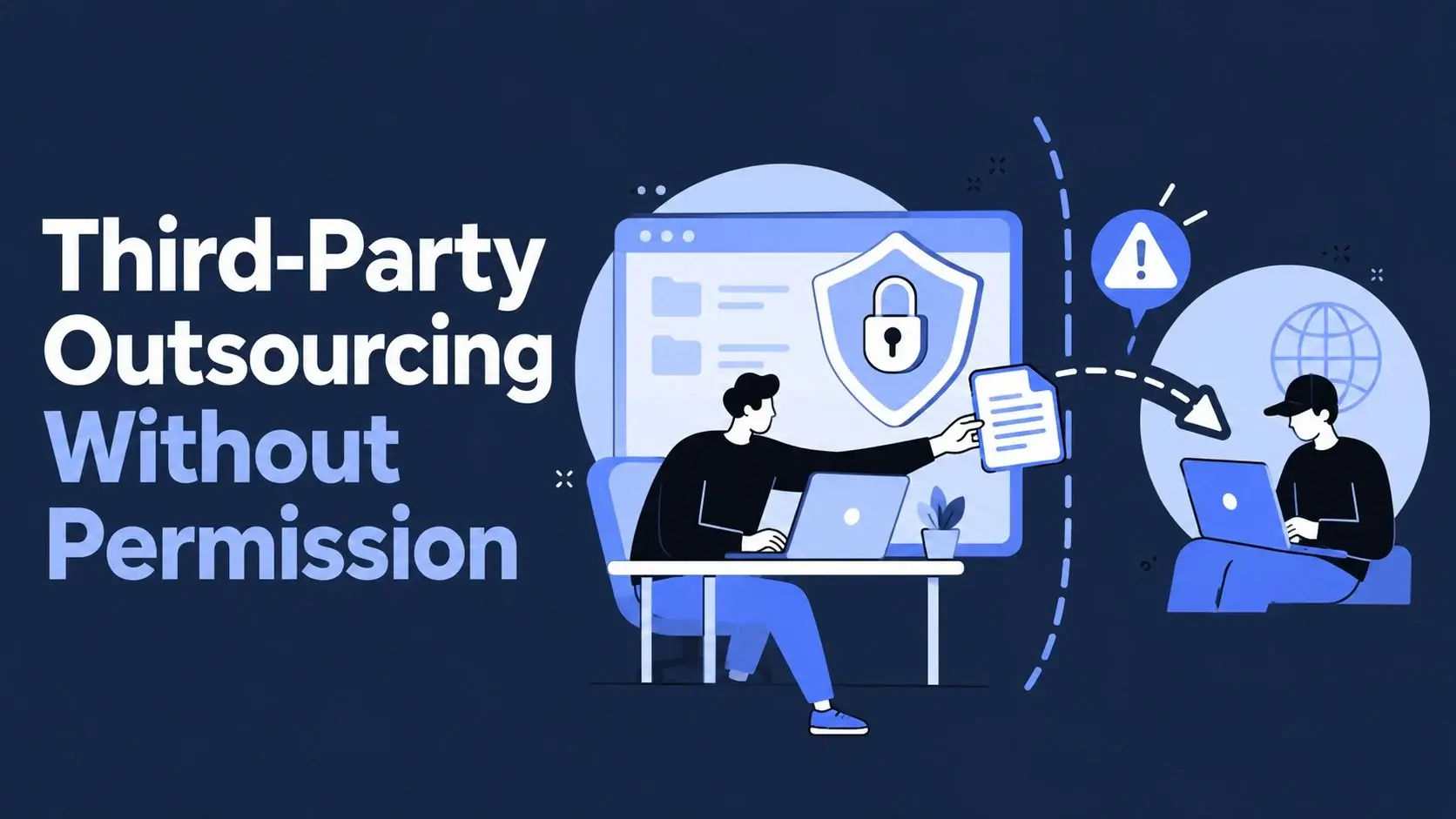
Some retouching providers take orders from brands and hand them off to a third party you don't know. These companies hire freelance retouchers without letting the clients know. This undisclosed subcontracting creates both confidentiality and quality risks.
As a client, you may notice inconsistent edits mid-batch on the same product type. Worst case, your exclusive jewelry photos are used before release or leaked.
Signs your files changed hands:
Editing style or color correction shifts mid-batch
File metadata shows software or timestamps that do not match the vendor's usual pattern.
The vendor answers "who worked on this batch?" vaguely
Turnaround speeds up when the vendor should be at capacity
Is Some Subcontracting Normal, or Always a Red Flag?
Some is normal. Clear and approved arrangements are common and acceptable. The issue arises with undisclosed ones. Your non-disclosure agreement (NDA) should clarify third-party involvement and hold the vendor accountable if they don't follow it properly.
4. Missed Deadlines During Launch
A lot of our clients have mentioned this issue. Many companies claim they can deliver photos in 24 hours, but the reality is usually quite different. Brands end up with no updates or suddenly delayed dates, with no explanation. This leads clients to miss their launch dates, even after they’ve already paid half the project cost upfront.
How Many Missed Deadlines Justify Switching?
If you have two misses in a row or two misses in your last five batches, you should switch vendors if they haven’t provided a written explanation. A late batch with early notice can be a minor issue. However, if the vendor is often unresponsive, that's a problem.
5. No Account Manager, or Too Many Managers
This complaint takes two opposite forms. Either nobody answers fast because no one is your dedicated contact, or too many people work on the same project. Let’s say you have sent a revision request to one account contact. Someone else handles the follow-up with no context on the original request. Or your text goes unseen during an emergency or gets a late reply.
Is Slow Response a Time-Zone Issue, or an Account Management Problem?
Timing reveals the situation. If a reply arrives the next morning, it means there's a time-zone difference. If a reply takes a long time during the vendor's working hours, it's an issue with account management. To avoid it, always ask for one specific contact and a written response timeframe.
To Sum Up
Every reason on this list is a process gap. Brands that check skills, contracts, capacity, and account ownership avoid the most switches. At Color Clipping, 100+ retouchers work under a three-step QA process. We sign an NDA and SLA before work starts, use a dedicated jewelry retoucher team, assign an account manager, and reply within 15 seconds. This is what a long-term retoucher partner looks like.