Why flat lay photos lose customers: common drawbacks

Read | Loved by: 10206

The reason your gorgeous flat-lay photos get likes but zero sales is:
Static angles lack emotional connection
DIY-looking setups make premium products appear cheap
Cluttered compositions confuse customers
Lighting mistakes cause color inaccuracy
Editing errors destroy brand consistency
Overlooked details like wrinkles, dust, and reflections
Don’t worry. These are all fixable. You can turn each of your flat lay photos into a top-selling product with just a few simple choices. Keep reading to find out how!
Relatable Reads: How Expert Photo Retouching and Editing Services Drive ROI
What Makes Flat Lay Photos Visually Appealing But Commercially Weak?
Flat-lay photos fall short because they offer little emotional connection. It’s a plain photo with no context. Well, some of you may disagree. Let’s clear that for them.
Flat-lay photography tells stories through the arrangement of objects. It gives creators complete control over the composition. While these photos catch your eye instantly, they might not always be the best choice when selling products online.
Why Flat Lay Photos Look So Good
Think of it like creating a puzzle where every piece matters. You can arrange products, play with textures, and create something truly eye-catching.
Here's what makes the best flat lay photos so appealing:
They're clean and organized, making everything easy to see
They show off closer details
The quality of products is presented in a visually pleasing way
You have total control over colors, arrangement, and mood
They work great on social media platforms
The Commercial Weakness: Why They Don't Always Sell
Here are the main issues:
1. Static, Flat Angles
When you see a sweater laid flat on a table, it's harder to imagine yourself wearing it. You can't imagine seeing someone actually wearing it in real life.
Think about it this way: Would you rather see a backpack lying flat, or would you prefer to see someone hiking with it? The second option helps you picture yourself using it, right?
That emotional connection is super important for making sales.
2 . No Depth or Lifestyle Context
Flat-lay photography is limited to front and back views. There is no way to photograph products from different angles. Customers find it hard to picture how the product will look on them.
When you're shopping online, you want to see:
How the product looks in real-world situations
Its actual size and proportions
How it moves or functions
How people use it in their daily lives
Flat lay photos can't show these things as effectively as lifestyle photography can.
3. Overexposure or Shadow Imbalance
Flat-lay photos require minimal post-production editing. However, poor lighting can make items look unrealistic or dull. This is one of the biggest technical challenges with flat-lay photography!
Common lighting problems include:
Harsh shadows that hide product details
Overexposed areas where colors look washed out
Uneven lighting that makes textures hard to see
Dark spots that make products appear less appealing
Check out: How to Create a Natural Shadow in Photoshop in 2024
Why Do Brands Lose Customers Through Poor Flat-Lay Execution?

The issue lies in the poor execution of flat lay photos. These photos can make potential customers think twice about buying from you.
Problem 01: DIY-Looking Photos
A poorly prepared product will look cheap, distorted, or misrepresented. It brings higher return rates and lower trust in your brand. Even the simplest flat lay images require meticulous preparation and attention to detail.
Here's what makes flat-lays look unprofessional:
Messy arrangements that look like you just threw things down without thinking
Wrinkled or poorly prepared products that appear worn or low-quality
Using random household items as props that don't match your brand
Inconsistent photography style across different products
Problem 02: Cluttered Layouts
Ever looked at a photo and felt confused about where to look? That's what happens with cluttered flat-lays. It's a huge problem for sales!
Overcrowding can take away from your main object or focus of the image. This is especially true for flat lay clothing photos.
Common cluttering mistakes include:
Adding too many decorative props that steal attention
Using props that are cute and trendy, but they conflict with each other
Not leaving enough "breathing room" between objects
Not having a clear place for the eye to go
Problem 03: Inconsistent Lighting and Colo
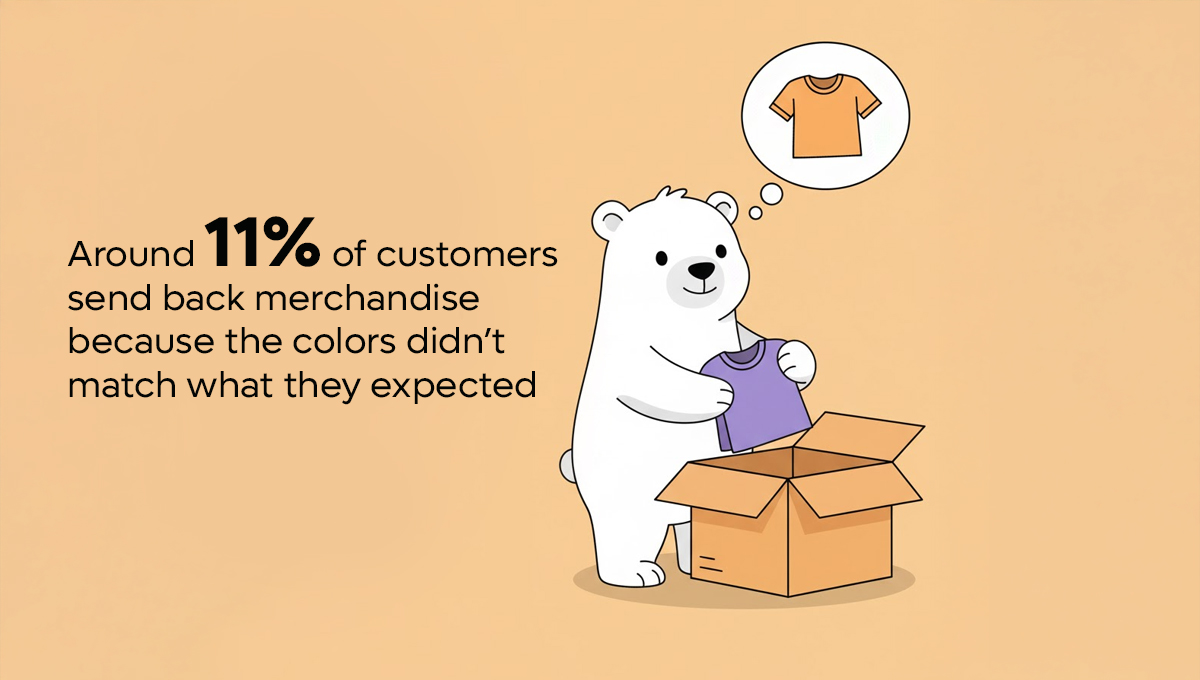
Poor lighting, including shadows, overexposed, or underexposed images, hides product details. Bad lighting doesn't just make photos look ugly. It actually costs you money through returns and lost customers!
Common lighting problems in flat lay photos:
Underexposed images that detract from the subjects in the photo
Harsh shadows that hide important product features
Overexposed areas where colors look washed out and unrealistic
Not using a reflector to light uniformly when shooting close to windows with natural light
Also read: Top 5 photo editing company
What Editing Mistakes Turn a Flat-Lay Into a Flat Sale?
You spent hours arranging the perfect flat-lay photo. And somehow, what started as a gorgeous photo turned into something that just doesn't sell. Sound familiar?
Let's talk about the biggest editing mistakes that can turn your stunning flat-lay into a sales disaster!
1. Mistake: Over-Sharpening or Over-Brightening
When editing flat lay clothing photos or product shots, it might be tempting to increase the sharpness slider. But hold on! Going overboard with it distracts the eyes from the main subject.
Think of it like using hairspray on your hair. If it looks like you've used too much, you've gone too far!
What happens when you over-sharpen:
Fabric textures start looking unnatural and plastic-like
Sensor noise becomes visible and distracting
Fine details get exaggerated in weird ways
Images can appear noisy or show white or black regions near the edges
Similarly, using the brightness or exposure too much makes your products look washed out and fake. If you overdo it, the image will lose all the details.
2 . Mistake: Ignoring Shadow Correction
In real life, everything casts a shadow! When your flat lay photos lack proper shadows, your brain knows something's off. It may look totally off, unnatural, uninviting, and pointlessly floating in space.
Common shadow mistakes include:
Removing all shadows during background editing
Not adding shadows back after background removal, leaving products looking flat, detached, and unrealistic
Making shadows too dark or too light
Placing shadows at incorrect angles that don't match your lighting
3. Mistake: Unbalanced Color Tones
One of the biggest mistakes? Oversaturation. When you boost saturation too much, colors look fake and artificial. You can really see the difference between properly edited and over-edited images.
Steps to maintain color consistency:
Get the overall exposure and white balance just right first
Go for neutral and natural-looking images
Use the same color grading across all your product photos
Save your editing presets so every photo gets similar treatment
Use the Color tool to adjust hue and temperature
Replace one color with another if needed
4. Mistake: Overlooked Details
Customers zoom in. Way in. And when they do, they'll see every tiny flaw you missed during editing. These small details can change a customer's decision.
For e-commerce product photos, a certain level of retouching is necessary. If it doesn’t go into the tiny details, it will be noticeable. What looked fine on your camera screen can look terrible once uploaded!
Common Detail mistakes are:
Ignoring fabric wrinkles
Spots, dust, scratches, rubbings, cuts, and tears
Scratches or scuffs on shiny surfaces
Wrinkles in fabric that make clothing look worn
Camera reflections in shiny surfaces
Fingerprints on glass or glossy items
Relatable Read: Difference Between Photo Editing and Retouching in Photoshop
What Should a Perfect Flat-Lay Look Like to Sell?
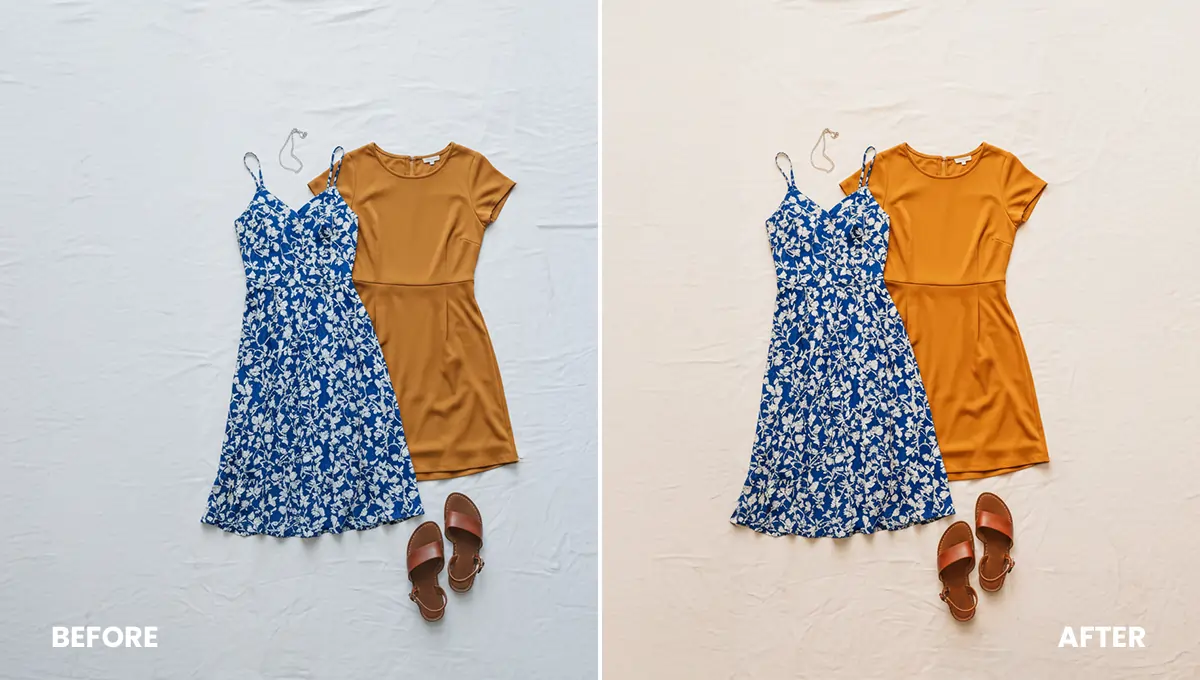
Any product that will stop the customer's scroll will have something unique. And that key factor is the details.
Dynamic Composition with Subtle Depth
Most flatlays have a hero product. The hero will get the most screen presence. Everything else will just make it stand out from the crowd!
If any elements go south, the hero will lose the charm. So, the distraction should be removed.
Quick tips for dynamic composition:
Place secondary props around the major elements to fill in gaps,
Trying different positions and angles to see what fits into the overall composition
Balance the spacing so your details don't overwhelm your hero product
Embrace both negative and positive space
Pay attention to proportions by balancing the sizes within the composition for a visually pleasing arrangement
Balanced Contrast
Your customer can’t touch the product on screen. So, your photos need to show what the product is all about. Get close-up shots to show them the details. Put more attention to the textures, patterns, and unique features.
Key tips for realistic materials:
Position your light at a 45-degree angle to your surface
Diffuse it with a sheer white curtain for that magazine-worthy glow
Use light and shadows to create depth and dimension
Ensure the object is clean, free of dust, dirt, or marks
Choose your flat lay photo backdrop wisely
Lifestyle-Inspired Flat-Lays
A well-designed flat-lay image can really hit home with customers. When products are arranged to showcase a certain lifestyle, people connect with those aspirations.
Create emotional connections:
In product photography, fill the background with elements that explain what’s happening.
If you're selling hot cocoa mix, use warm colors and fabrics that bring a winter feeling into the photo
Choose props that support your story by adding context without stealing the limelight
Every item in your flat lay should have a purpose
Add 2-4 complementary props (odd numbers work best)
Consistent Branding
Customers mostly remember the strong aesthetic that your brand represents. With a flat lay photo, the consistency builds the recognition.
Maintain consistency across:
Come up with a color palette that represents your brand identity.
Your brand colors, logos, or visual themes should be the same on all platforms.
Put the shadow and lighting direction in every shot
Reflect the actual color of the product
Avoid unnecessary reflections or saturation
Check out: Lifestyle Product Photography Ideas
How Professional Product Photo Retouching Solves These Problems
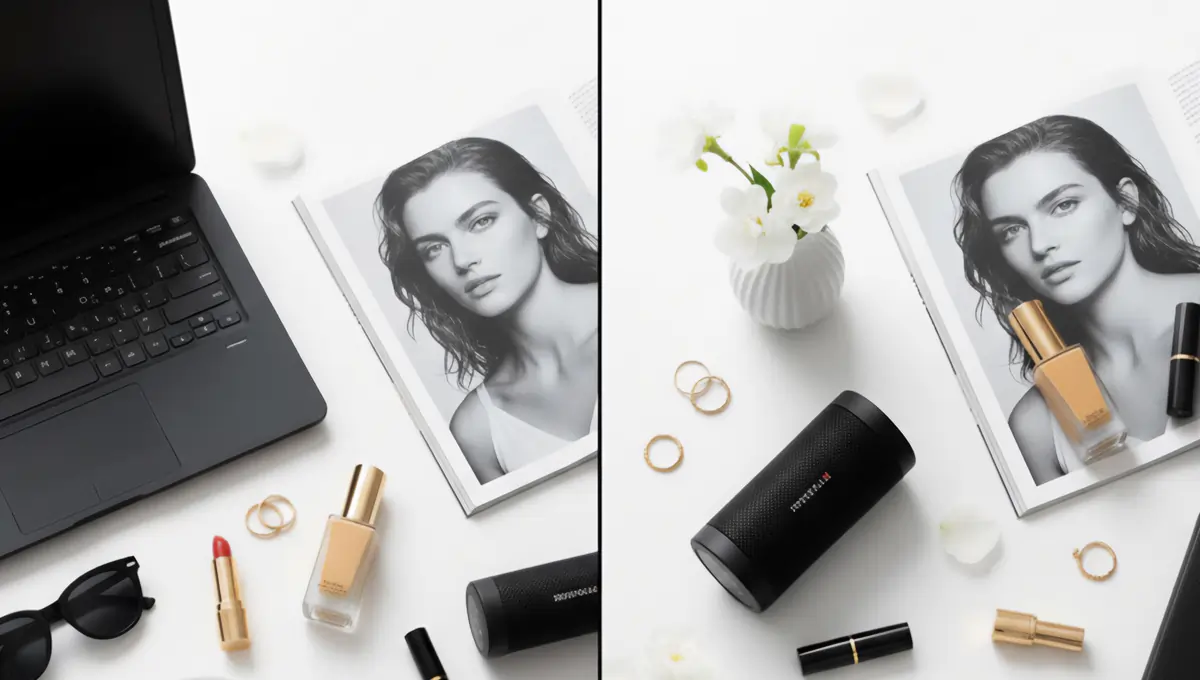
Now, let the professional in. Photo retouching services can turn any lifeless photo into an amazing flat-lay. Photos that will catch attention and get sold. So what professional retouchers will do for you:
Adding reflection shadows
Creates the illusion that objects rest on reflective surfaces
Adding depth and luxury to images
Natural shadows to make products appear grounded
Color correction techniques to match real-life product colors
Custom color correction matches brand consistency
Balance shadows to create depth without losing detail
Sharpen and structure enhance textures
Before-and-after examples reveal how retouching transforms
Visual sliders showing retouched vs non-retouched photos
Wrapping Up
Enough with those poor-looking flat lay photos. Professional retouching services can rescue your existing flat-lays and create high-quality visuals. That’s what your brand needs to increase sales.
We at ColorClipping would do for your brand. Send us your current flat-lay photos and see exactly how retouchers can boost your product's appeal. No obligations. Just see the difference for yourself.
FAQ

Sumaia Islam
Sumaia Islam is an SEO content writer. She writes for global B2B brands, specializing in AEO and GEO frameworks. With 4+ years of experience, she combines strategic thinking for AI visibility with editorial depth.